News & Publications
New hemodialysis equipment transforming kidney care
Oct 15, 2026
Categories: Contracting, External Links, News, Patient Family Partners
Patients and care providers across Saskatchewan are seeing significant improvements in care following the province-wide rollout of new hemodialysis machines in late 2025.
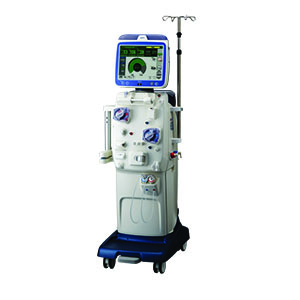
More than 1,000 Saskatchewan residents rely on life-sustaining hemodialysis care each year to improve their quality of life. With the introduction of new machines in treatment centres across the province, those patients and nursing staff are benefiting from new technologies, improved user experience, and safer and more responsive treatment.
3sHealth uses an audited measurement system to evaluate the impact of the improvement initiatives its employees and health system partners contribute to each year. Using this metric, 1,073 hemodialysis patients will experience positive impacts per year thanks to the new machines, while 348 nursing staff administering treatments will benefit from improvements annually as well.
Why it matters
The kidneys are important organs that ensure your body functions as it should. They filter your body’s blood, remove waste products from the bloodstream, regulate hormone levels, and balance bodily fluids. They also produce hormones that are needed to control blood pressure, produce red blood cells, and keep bones healthy.
But when the kidneys are injured or damaged, these processes can slow down or fail. Hemodialysis is a vital mechanical process that can help patients with acute kidney injury and kidney failure live longer and improve their quality of life by replicating the work of the kidneys: extracting the blood from the body, filtering it and removing excess fluid, and returning it to the body.
With the end of the existing contract for hemodialysis machines approaching in 2024, 3sHealth worked with partners to identify and evaluate vendors that could provide more modern devices. A number of vendors were identified through a request for proposal, and trials were held in Regina and Saskatoon to allow patients, nursing staff, and clinical engineers to evaluate different machines.
More movement, quicker responses
Between May and December of 2025, 223 new Nikkiso machines were installed in 13 dialysis units across Saskatchewan, including hospitals in Regina and Saskatoon.
The devices are much more patient-focused, featuring a more streamlined interface, with less visual clutter and buttons that are easier to understand. Care providers can set reminders for time-sensitive processes, like saline flushes and blood sugar checks, and the built-in blood pressure check is faster. Patients have reported being able to move more freely during treatment without triggering alarms and that the machines produce less noise overall than previous devices, reducing the discomfort and anxiety that comes along with treatment.
All of these features represent a significant improvement for patients.
“This new machine is a lot safer for the patients and nurses because it has a large screen and fonts which the patients and nurses can read easier,” Patient Family Partner Brenda Bahnmann emphasized. “If the patients are feeling ill, they can take their own blood pressure. The termination of treatment is automated, which totally eliminates any errors.”
Bahnmann noted that patients can self-administer a bolus during treatment, if necessary, providing a greater sense of safety and peace of mind. This refers to injections of anticoagulant or pain medication administered during the course of treatment.
Numerous patients have also expressed enthusiasm for the machine’s automated washback function. Taking place at the end of a treatment, this procedure returns as much blood as possible back to the patient’s circulation, along with infused saline. This helps prevent unnecessary blood loss and reduces the risk of anemia to patients.
Nursing staff also seeing benefits
Nearly 350 nurses have been trained to use the equipment and provided input during the clinical trials. For frontline staff, the new units are ushering in more efficient workflows and improved clinical decision-making.
“The Nikkiso dialysis machines enhance our patient care through advanced safety and assessment features,” said Licensed Practical Nurse Lori Dakiniewich, who works in hemodialysis at the Wascana Rehabilitation Centre. “With on-screen troubleshooting, simplified start and end procedures, and built-in assessment tools, nurses can manage treatments more efficiently.”
Crucially, automated processes, like treatment termination and blood pressure monitoring, eliminate potential human error. Being able to access key patient data more quickly also gives care providers more time to focus on patient care.
A year of improvements
Improvement initiatives are measured for celebration when they demonstrate that care has been made more people-centred, accessible and timely, effective, efficient and sustainable, safe, equitable, and integrated. The number of impacts is calculated using health system reported data and the number of people who experienced the improvement over a one-year period.
The replacement of outdated hemodialysis machines is just one of the improvements 3sHealth contributed to during the 2025-26 fiscal year. Check out this story for details on the other improvements that helped create more than 815,000 positive impacts.